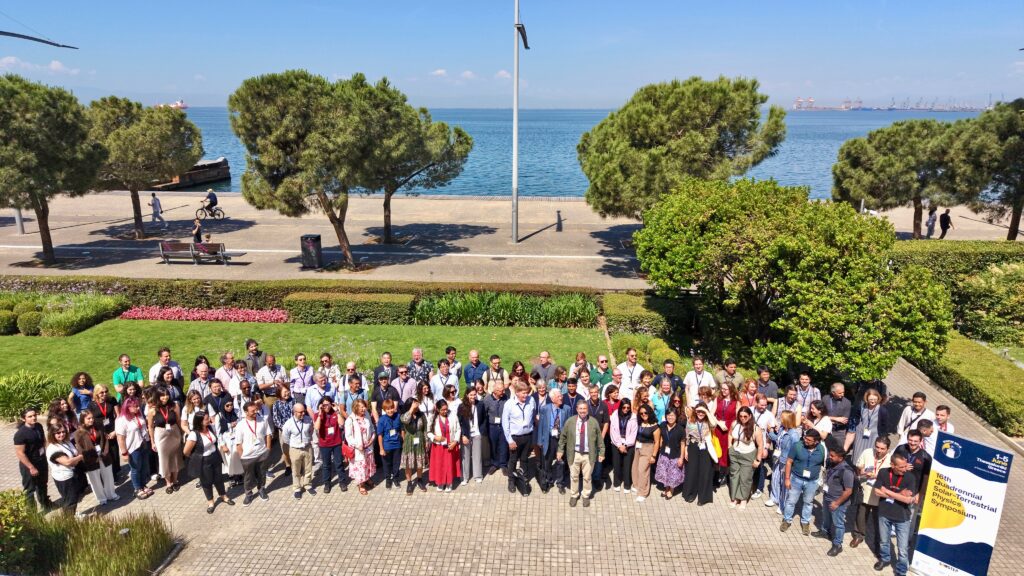
The 16th Quadrennial Solar-Terrestrial Physics Symposium of SCOSTEP, organized jointly by the National and Kapodistrian University of Athens, the Hellenic Space Center and the Mariolopoulos-Kanaginis Foundation for the Environmental Sciences (MKF), was successfully held in Thessaloniki on June 1-5, 2026 (https://www.stp2026.org/). The Mariolopoulos–Kanaginis Foundation (MKI) was represented by its Vice President, Dr. Konstantinos Liatsos.
The conference was preceded by a dedicated 2-day advanced school on May 30-31, with six lectures and hands-on exercises on various aspects of solar-terrestrial physics.
The Symposium comprised the following six sessions:
- Cross-scale coupling processes in Sun-Earth relationship
- Sources of Space Weather & Space Climate
- Solar Wind, Magnetosphere, and Ionosphere Coupling
- External Impacts and Internal Dynamics of the Earth Atmosphere
- Modelling, Data Analysis Tools, and Data Science
- Initiatives for Ground- and Space-Based Solar-Terrestrial Physics Research
Scientists from 26 countries participated in the Symposium.
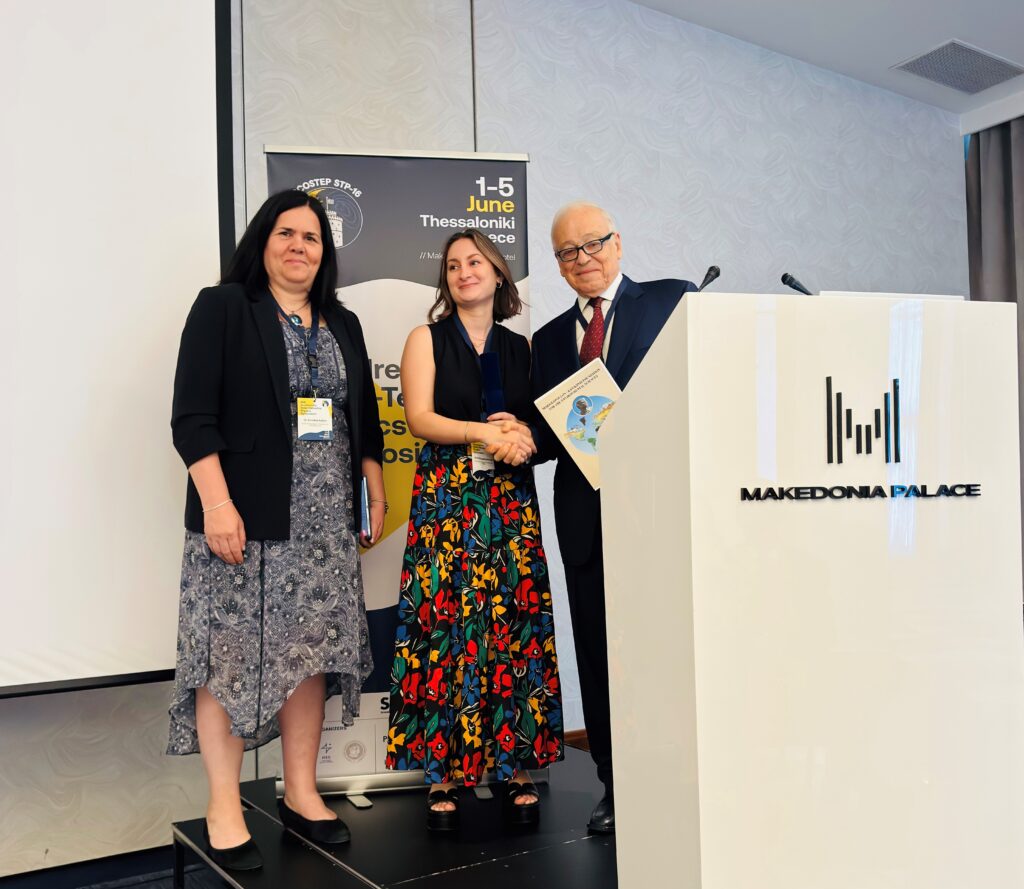
At the 16th Quadrennial Solar–Terrestrial Physics Symposium, held at the Macedonia Palace Hotel in Thessaloniki, the special award ceremony for the “WMO Professor Mariolopoulos Trust Fund Award 2026” took place on Monday, June 1, 2026. The award was presented by Dr. Constantinos Liatsos, Vice Chairman of the Mariolopoulos-Kanaginis Foundation, and Dr. Kornélia Radics, Director of the WMO Regional Office for Europe.
The award was granted half to Ms. Sofia Papadogiannaki for her work titled “Comparative modeling approaches for predicting Olea and Quercus pollen seasons in Thessaloniki, Greece”, which was published in Nature in 2025, and to Mr. Guinaldo Thibault for his work titled “Internal variability effect doped by climate change drove the 2023 marine heat extreme in the North Atlantic”, which was published in Communications Earth & Environment in 2025, and who was not able to attend the award ceremony. This award is presented every two years to a young scientist jointly by the Mariolopoulos-Kanaginis Foundation and the World Meteorological Organization (WMO) for an outstanding study involving original research in atmospheric sciences, published in a reputable peer-reviewed scientific journal within the past two years.
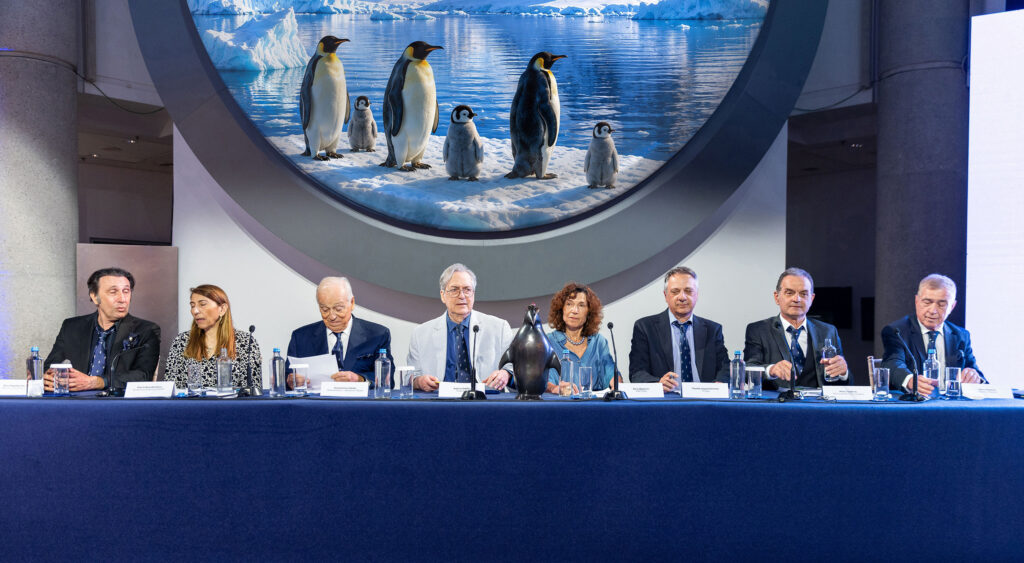
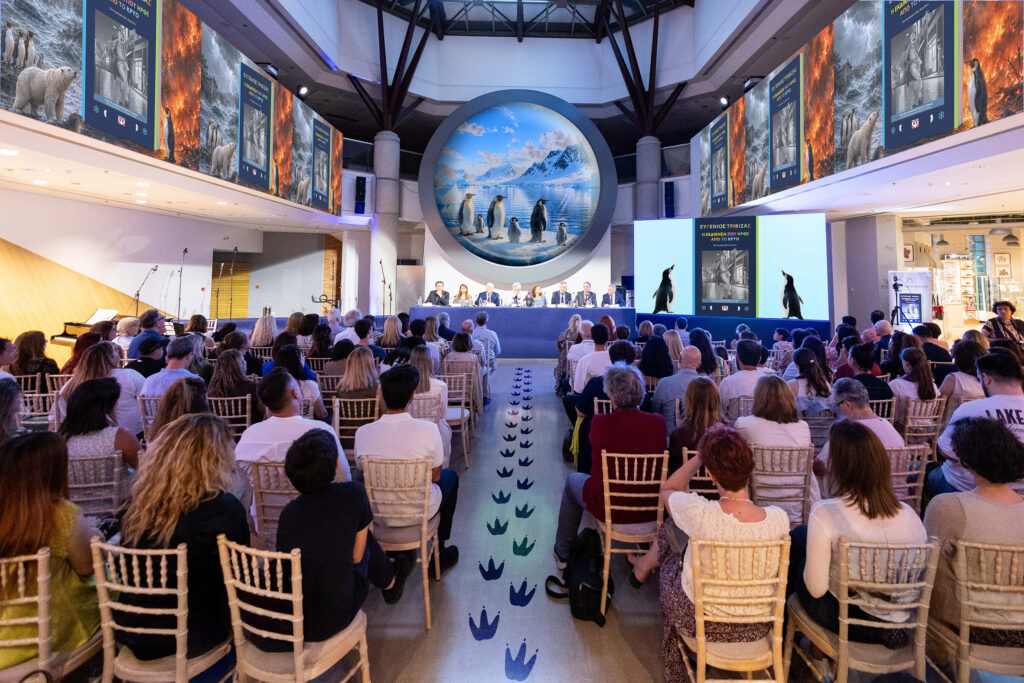
On 8 June 2026, the MKF, the Goulandris Museum, and Psichogios Publications co-organised the presentation of Eugene Trivizas’ new novel, Revenge Came from the Cold, at the Goulandris Natural History Museum. This is a novel where humour and adventure meet environmental awareness and reflection on the climate crisis.
The attendees travelled into the fascinating world of Antarctica’s penguins, which are confronted with the dramatic consequences of ice melting and the rapid disruptions to the planet’s natural balance.
For the book, remarks were delivered by publisher Thanos Psichogios, the MKF Vice-Chairman, Mr Constantinos Liatsos, who outlined the Foundation’s objectives, and, via a video message, the MKF Chairman, Professor Christos Zerefos, who has written the foreword to the book. Also, there were speeches by: Ms Eugenia Christodoulakou, Executive Director of the National Museum of Natural History; Ms Eleni Svoronou, Head of Environmental Education at WWF Greece and author; and Mr Pericles Dimitrolopoulos, Director of “To Vima”. As the author emphasised, he would like the readers to derive two key messages: “First, that our actions have consequences, even when these are manifested thousands of kilometres away from us, and secondly, that the future has not been written yet. Climate change is a painful reality, not an inescapable doom. If we act promptly and decisively, we can still shape a different future”. The moderator of the discussion was journalist Makis Provatas. During the event, actor and director Mr Renos Charalambidis read excerpts from the book. The Music Ensemble of the Arsakeia-Tositseia Schools and the GraduArti Alumni Choir, conducted by Christina Varsami-Koukni, performed choral works from the dream-drama opera Twelve to Twelve (Dodeka para Dodeka) by Eugene Trivizas, with music by Dimitris Papadimitriou and accompaniment by cellist Aris Zervas. The literary, scientific and musical journey came to a close with an original “Polar Buffet” held in the Museum’s garden.